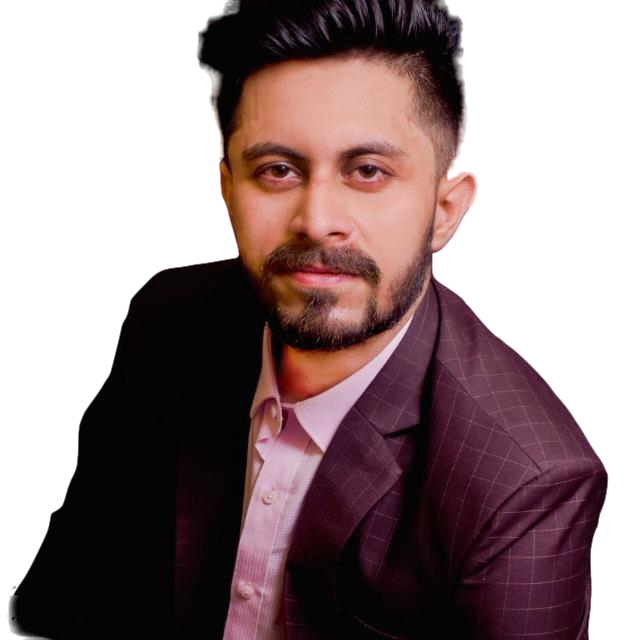
I’m SubhamVerified badge for Subham OjhaThe Psychepreneur™ .

Subham Ojha, known as The Psychepreneur, is a Technical Product Architect and Founder of CX Guru.
I help digital businesses bridge the gap between “Manual Chaos” and “Automated Scale.” I build the operating systems that allow creators to treat their business like software—scalable, predictable, and efficient.

About Subham Ojha The Psychepreneur

Who is Subham Ojha — The Psychepreneur?

Subham Ojha is a Technical Product Architect, automation builder, and digital creator. His work focuses on product strategy, AI systems, workflow automation, customer experience, and digital authority.

What is The Psychepreneur?

The Psychepreneur is the personal brand of Subham Ojha. It combines psychology, entrepreneurship, AI, automation, and product thinking to help people build clearer identities and stronger systems.

My Technical Expertise

  • Product-Led Growth: Architecting systems where product utility drives the marketing.

  • Automation Infrastructure: Deploying n8n workflows and AI agents to replace manual operational drag.

  • System Design: Converting abstract “creative ideas” into executed technical roadmaps.

Founder of CX Guru

Subham Ojha is also the Founder of CX Guru, a customer experience and automation-focused project built to help businesses move from manual chaos to automated scale.

Ready to stop hustling and start architecting? Let’s build.

Audience

Customers

Built Online Businesses For

OUR MISSION—

To empower entrepreneurs and creators to build thriving, profitable online ventures using AI intelligence + human psychology.

OUR VISION—

A world where digital creators and business owners design sustainable success — fueled by creativity, conviction, and the smart use of technology.

  • My Journey → The Making of The Psychepreneur ↓

    I’ve always been a wanderer in my own career, an observer, a builder, and ultimately, a Psychepreneur, as I like to call it.✍🏽

    I didn’t come from privilege, and I wasn’t handed a Silicon Valley playbook. My foundations were built in a Tier-3 city. I grew up in a humble joint family, navigating the world surrounded by cousins, deeply pampered by my mother, and relentlessly supported by my father, who gave me the grounding I needed to eventually take massive risks.

    I was put into an English-medium school in the 2nd grade, I was completely out of my depth. Up until the 12th grade, I could barely string together a sentence in English. Today, high-level communication and complex system architecture are my most lethal weapons. But back then, all I had was Wi-Fi, YouTube tutorials, and a curiosity that absolutely refused to die.

    So, I started iterating.

    In engineering college, I was the guy who tried everything. Competitive coding, IoT, blockchain, event management. While the top-tier students in my batch put their heads down to do the “boring things” required to crack elite placements, my focus was everywhere. On paper, I looked completely scattered. I wanted to be the leading event coordinator, the campus entrepreneur, the best website developer, and the research paper author all at once.

    I was that guy who tried everything…I realized I wasn’t just a coder or a designer; I was searching for the intersection where all these skills met. I wasn’t quitting; I was iterating. I’d build a few templates, and move to the next thing because somewhere I was looking for something that felt like me.

    By 2020, while my peers were putting their heads down to prepare for IIT M.Techs and government exams, I was preparing for life.

    I had internalized society’s script: the belief that success meant cracking an elite placement and immediately landing a 15–16 LPA package. When reality handed me a 3 LPA web developer role as a first-batch graduate, my mindset blocked me. Objectively, it was a solid company that laid the technical foundations of my career. Subjectively, I felt like I was failing. I wildly underestimated the opportunity and my own worth. I wanted to take a gap year to hit reset, but the fear of a “dead résumé” whispered in my ear. So, I burned the corporate life.

    I wanted to take a gap year, focus, reset, figure things out, but fear whispered, “what if your résumé dies?”

    So instead of taking a safe gap year, I resurrected an old ghost in my mind. At first, there was no website. There were no polished social media profiles. It was just me, leaning entirely on my raw authority over my craft and a relentless focus on direct problem-solving. It was only later, when things got serious, that I even built a website for it.

    This was CX Guru, a tiny brand I’d started back in college in 2015 as an absolute joke.

    This time, I went all in. No funding, no co-founder. Just pure Wi-Fi, curiosity, and chaos.

    I was flying completely blind, especially when it came to pricing. I had absolutely no idea what my skills were actually worth on the open market. I remember landing my first real gig and pulling up an online quotation calculator just to figure out what to ask for. The calculator spat out a number: $4,000.

    It was in 2019, I stared at the screen thinking, bro, that is more than my current corporate job pays me in months, for work that will literally take me maybe two hours to do. I was terrified. My mindset was still boxed in by my 3 LPA reality. So, fearfully, I ignored the calculator and invoiced them for $400 instead. I took the massive pay cut and did the work anyway, convincing myself that the low price tag was justified because I was “building the business.”

    People told me freelancing was a sin — a dead end.
    But I was a misfit anyway.

    Over the next 3½ years, I worked with clients across the world — from Hong Kong e-commerce firms to ed-tech startups, blockchain projects, consultants, and coaches.

    I sold everything I could build websites, apps, funnels, automations — and learned what no course ever teaches:
    that business is just belief, systemized. It wasn’t glamorous.
    There were months of burnouts, delayed invoices, and impostor nights.
    But it shaped me. It taught me to deliver, to listen, to lead without authority, and to create value without titles.

    After years of running CX Guru and generating that $45,000 in revenue, the reality behind the numbers was a lot messier. As a 22-to-24-year-old kid making internet money, I didn’t build a treasury—I burned it.

    I spent half of that money hiring other developers and freelancers just to build out my random hobbies. The rest? I blew it on cryptos, NFTs, and a pure “cope-lifestyle” just to keep myself moving. I was functioning on absolute zero emotions, completely numb, just doing whatever it took to get things done.

    I fell into the trap of “earn-maxxing.” I was picking up side hustles just to stack the plate—running CX Guru by day and hustling as a coding instructor by night. It was an absurd, chaotic schedule. I was surviving the chaos of building everything from scratch, and it forged me, but the feast-or-famine cycle of the freelance hustle was draining me dry.

    I made a ton of mistakes. The burnout eventually forced a massive reckoning.

    Guided by a need for stability, I made the decision to walk back into the corporate world. But this time, the dynamic had completely shifted. I wasn’t a desperate fresher hoping to be picked. I walked into that room with scars, receipts, and the undeniable ability to execute. I joined at 3x my starting salary in 2023.

    And for the first time, it clicked: my chaotic freelance journey wasn’t a detour at all. It was an absolute accelerator.

    Running my own micro-agency and making all those expensive mistakes gave me a lens that most people never acquire in a standard 9-to-5. Inside these massive companies, I could clearly see how broken systems, shallow metrics, and unclear communication were quietly killing brilliant ideas. I saw the massive gap between simply building a feature and actually understanding the business mechanics behind it.

    Writing raw code wasn’t enough for me anymore. Being just a developer meant I was a mechanic in someone else’s garage. I didn’t want to just build the website; I wanted to own the vision.

    That’s when I found my true edge: Product Thinking.

    I realized the real leverage was in Product Management. I invested heavily in myself, enrolling in a premium PM program. The course itself wasn’t magic—no course is—but the deep seriousness it awakened in me was. I started actively connecting the dots between psychology, product design, and storytelling. I studied the friction between human emotion and business architecture.

    It was raw grit that finally landed me a Business Analyst role, which I systematically translated into an Associate PM, and eventually, a Technical Product Manager.

    In that transition, my entire philosophy crystallized. I stopped caring about how the UI looked and started obsessing over how the system scaled. Plumbing over pixels. Whether it was architecting the backend logic for high compliance platforms or defining foundational API contracts across multiple industries, my focus locked onto the unseen structural integrity that makes a product truly powerful.

    Titles eventually stopped mattering. What mattered was the growing clarity that my actual craft wasn’t coding or content.

    My craft was conviction.

    As I stepped into the role of a Technical Product Manager, my reality split into two extreme, parallel lives.

    By day, I was navigating the corporate corridors. I was managing products, stepping into leadership positions, and sitting in high-stakes meetings with Chief Product Officers. I was executing across four completely different industries—from retail and manufacturing to ERPs and BFSI. I was the polished architect.

    But by night, my obsession with systems required a different outlet. I was operating in the extreme isolation of the build. I would come home to an empty room and pour my energy into building digital real estate, launching my omnichannel presence, and building The Psychepreneur. I made a decision to copy my exact psyche onto the internet, raw and unapologetically authentic.

    To stress-test my understanding of systems, my curiosity pulled me deep into the Web3 and blockchain trenches. When the bull market roared back in 2024, I didn’t just observe the Solana wave; I immersed myself in the hyper-volatility of it. I wanted to understand the absolute extremes of market mechanics and financial dopamine. I scaled 20 SOL into 107 SOL in a single year. I experienced the sheer velocity of decentralized markets, making ₹4 Lakhs in a single, one-minute trade.

    It was absolute chaos, and it was a brilliant proving ground. I had spent six years in the blockchain space experiencing end-to-end trading, living through the NFT wave in 2021 and the memecoin velocity of 2024.

    But the market is a brutal teacher, and not every conviction is right. The system that gives in minutes can take it back in seconds. I experienced the full spectrum of volatility. I got wiped out by sudden macro shifts. I made every single mathematical mistake you can make in high-stakes markets, and eventually, I ended up losing the capital I had gained.

    But losing that capital forced a massive pivot. Instead of chasing the next market pump, I took everything I learned about macro-economics, human psychology, and high-velocity systems, and channeled it into the people who were actually listening to me.

    In 2025, I took the funnels I had built, deployed my own capital on ads, and launched Conviction OS to the public. I built a tight-knit community that eventually refined down to 45 incredibly close friends. I helped non-techies launch websites, ran AI workshops, and watched this small tribe generate 15 million impressions. I realized that people didn’t just need ideas; they needed a system to cure their own friction. So, I engineered Conviction OS to do exactly that.

    But the most profound shift happened in my own mind.

    For years, I had survived by relying on an unsustainable grind—using endless side-hustles, chaotic market trades, and sheer willpower to push through corporate burnout. In 2026, I dropped that old framework entirely. I stripped away the noise.

    Right now, I am starting from zero, but the foundation is entirely different. I write my own copy, I lead my own team at my corporate job, and I build my own funnels. I am operating in a state of raw functionality. Clear-headed, completely dialed in, and functioning entirely on my authentic self. I realized the systems I used to survive corporate burnout and market crashes were the exact systems other creators needed to survive the internet.

    There are no more cheat codes. There is only the architecture, the execution, and the conviction.

    The Psychepreneur is not a generic marketing agency, and it certainly isn’t a motivational blog. It is a digital proving ground. It’s the exact intersection where the deep “plumbing” of Technical Product Management collides with the raw reality of human psychology. Through my flagship ecosystem, I am actively building maps for others to follow:

    Engineering Conviction OS: I help solopreneurs cure the ultimate human flaw—laziness—by building massive, custom automation workflows. We hardcode consistency into your business so you don’t have to rely on motivation.

    The AI Authority Protocol: A highly structured framework to take your raw, neurotically honest voice and scale it across the internet to build indexable, high-converting digital real estate.

    System Design & Funnel Architecture: Translating years of enterprise-level product delivery into actionable growth systems. From foundational API contracts to profitable ad funnels, I teach the mechanics of building a business that outlasts your moods.

    I started as a Tier-3 kid with zero map, zero mentors, and a head full of noise. Today, I am building the maps for a closed circle of builders who are ready to drop the cheat codes and operate in a state of raw, functional execution.

    If you are ready to stop chasing traditional paths and start architecting your own leverage, step inside.

    Welcome to the Dynasty.

Get in touch

Got something on your mind? Whether it's a question, a collaboration idea, or just to say hello, I'll try my best to respond.